Innovation
·
7
min read
Moving beyond hours: How AI redefines software value

Jan Hauser
AI is fundamentally changing the economics of software development. As engineers start delivering complex features in a fraction of the usual time, the traditional link between hours worked and value delivered is breaking down.
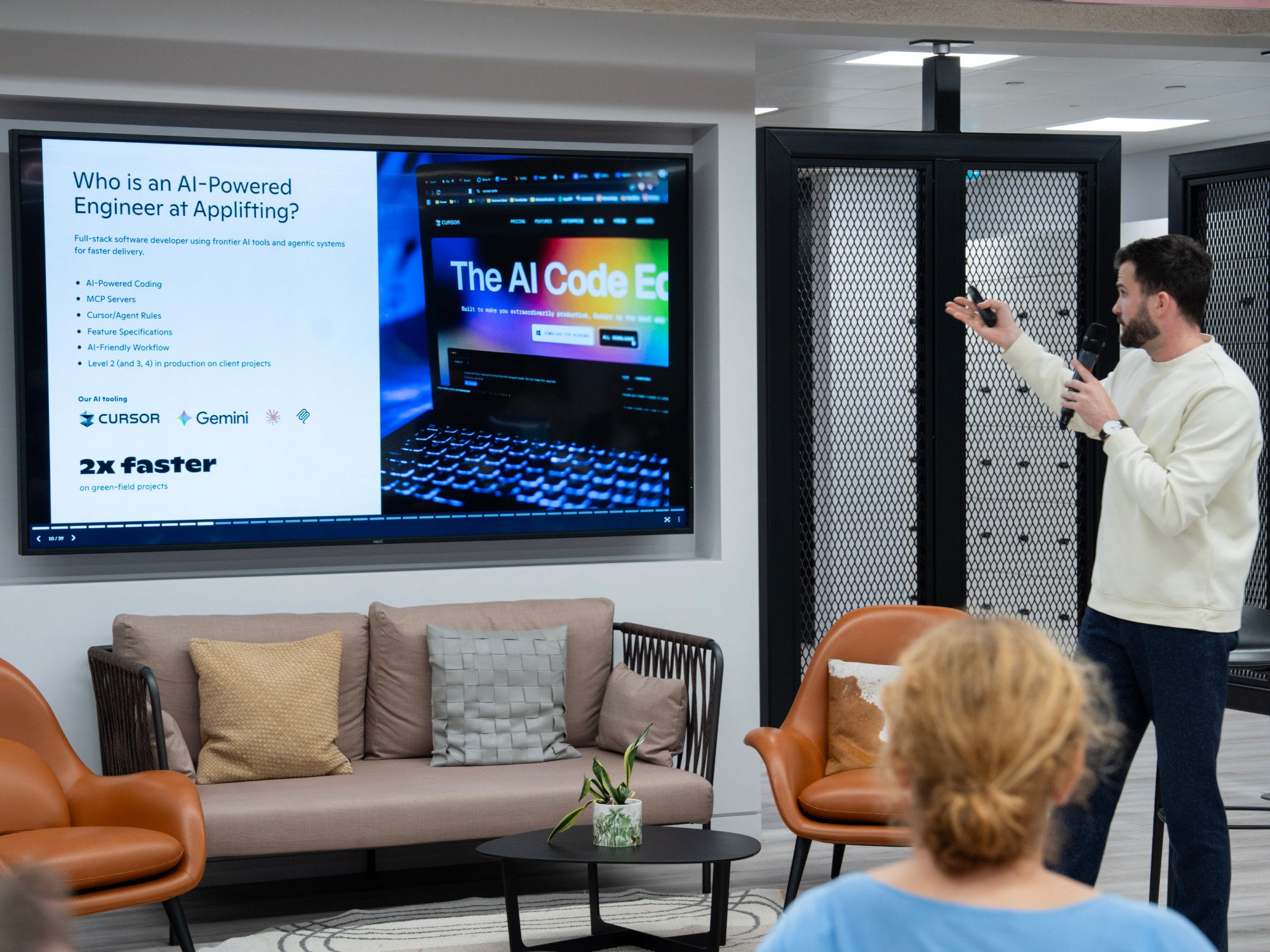
I recently spoke at our London event about how Applifting is adapting to these changes. The panel discussion made it clear that we are moving beyond just faster coding toward a complete rethink of the development process.
Climbing the maturity ladder
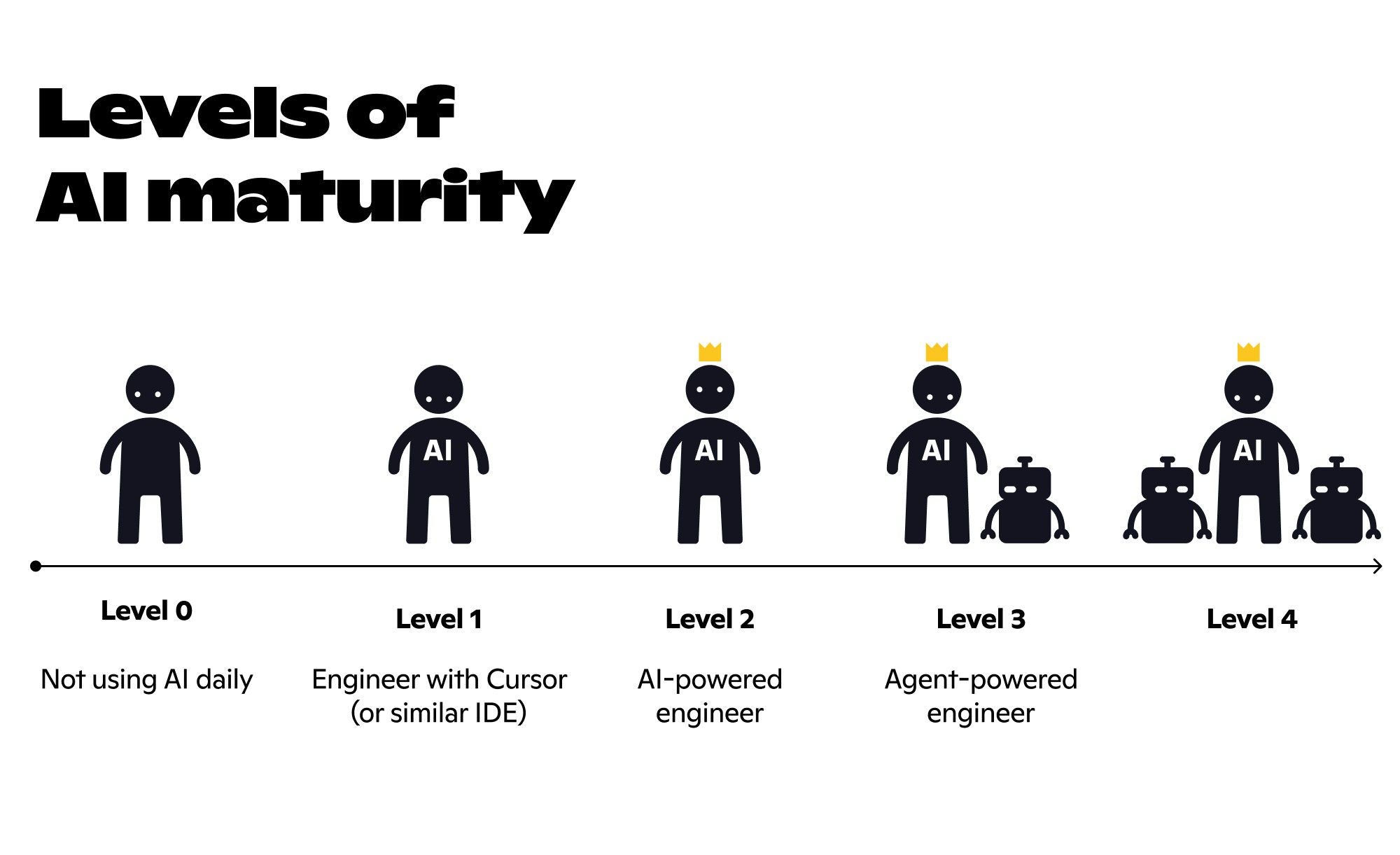
At Applifting, we have been investing in AI systematically for a couple of years. To track our progress and stay aligned, we introduced levels of maturity that reflect how an engineer actually works with these tools:
Level 0: The traditional approach, where AI serves as a simple search engine replacement.
Level 1: The experimentalist phase, using tools like Cursor for isolated tasks.
Level 2: The AI-powered engineer. AI is integrated across the entire cycle, from analysis to testing.
Level 3: The Agent-powered engineer. Using multiple autonomous agents and evolving the developer's role into an architect of intent who focuses on high-level architecture and code review.
When an engineer reaches the second or third level, the math of development changes. On greenfield projects, we see people move twice as fast. Speed is not the goal, however. The goal is value.
From prompts to context engineering
How engineers interact with AI is also evolving. Early on, a lot of attention went into prompt engineering. Finding the right phrasing, adding more detail, and trying to get the best possible output from a single input.
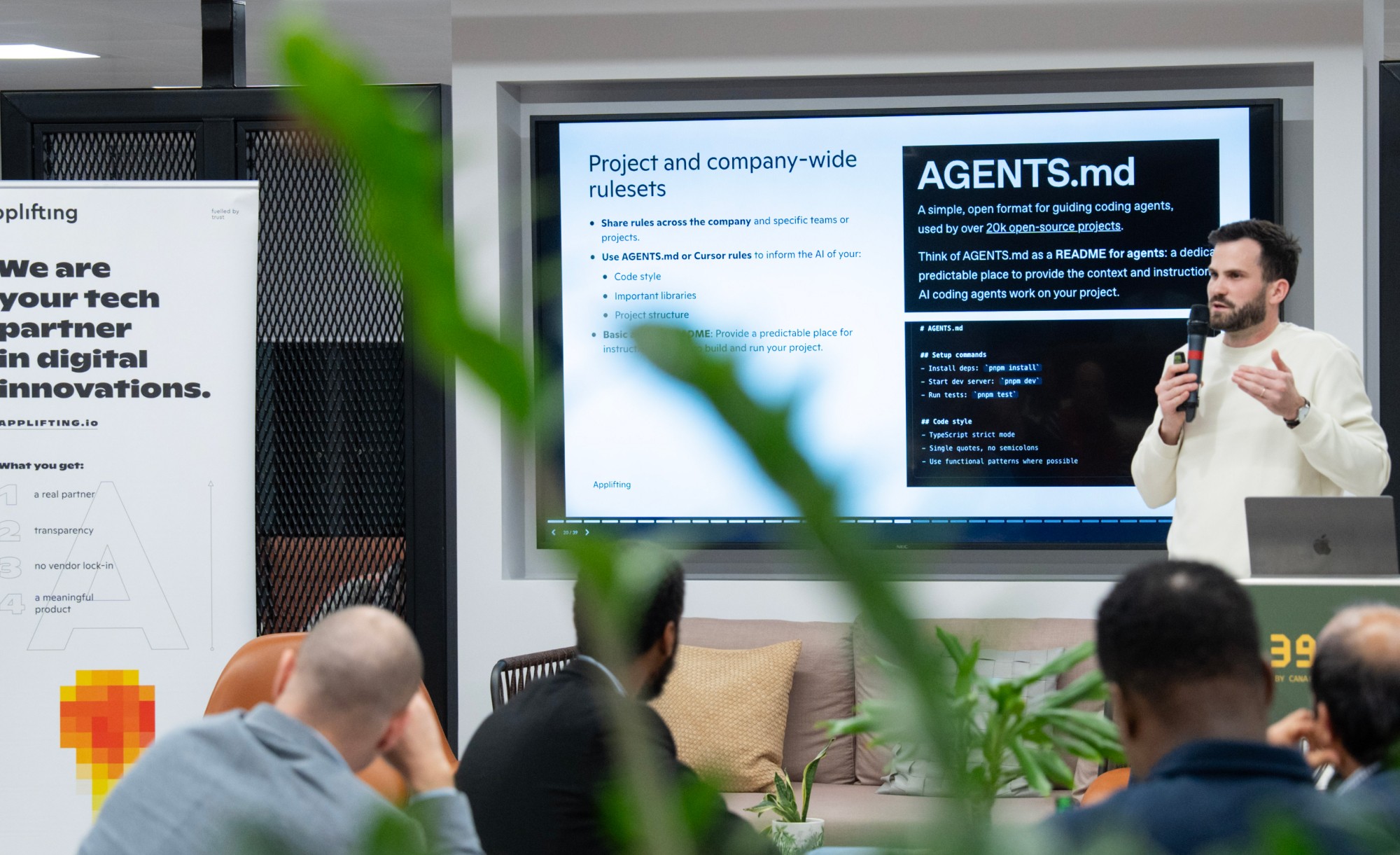
As teams spend more time working with AI, the focus moves away from refining prompts toward preparing the right context around them. What proves more effective is giving the model just enough information to move forward.
Short, clear prompts are often enough when the surrounding context is well structured, which is where most of the real leverage comes from. In practice, this comes down to a few things:
referencing existing code and patterns
reusing previous examples
structuring files so they are easy to navigate
Where AI wins (and where it shouldn't)
A common misconception is that AI’s primary value lies in writing code. In reality, some of the most immediate gains come from earlier and later stages of development. For example:
User stories can be generated in a consistent format that works well for development teams
Specification documents, API schemas, and infrastructure definitions are easier to create and maintain
Testing becomes easier to scale with generated scenarios and automated test coverage
Of course, there is still a need for caution. Some parts of the system require a more hands-on approach. Initial project setup and critical business logic benefit from direct ownership. These are the foundations that are harder to fix once they are in place. AI can support thinking in these areas, but handing over full control is rarely worth the risk.
Faster starts, different trade-offs
One of the most visible changes is how quickly new products can get off the ground. What used to require a full team over several months can now be delivered through AI-powered software development by a single engineer working with advanced tooling. This opens up space that was previously difficult to access. Early-stage founders with limited budgets can now validate ideas without committing to large upfront investments.
At the same time, speed introduces new trade-offs. Rapidly built systems may not be ready to scale without further work. The tools accelerate execution, but they do not replace judgment—if you get the architecture wrong at the start, AI will just help you build technical debt at record speed.
Teams are evolving along with the workflow
As more of the execution becomes faster and less constrained, the boundaries between roles start to shift. The way work is structured across the lifecycle naturally leads to more overlap between roles. Developers get closer to product decisions. Designers work more directly with implementation. Analysts and engineers collaborate earlier in the process.
This does not mean that specialisation disappears. It means that collaboration happens earlier and more fluidly, with fewer rigid handoffs between roles.
What becomes more important are skills that are harder to automate. Problem framing, communication, and the ability to navigate ambiguity with clear intent. These are the areas where human input remains essential.
What comes next
As outcomes become less tied to time, pricing models will need to adjust. The cost of work will increasingly reflect not just the time spent, but also the tools, infrastructure, and the quality of the result.
The direction is already visible. Measuring work purely by hours is becoming less useful in a world where the same result can be achieved in very different ways.
Success will belong to those who treat these tools as an opportunity to focus on the human side of engineering: solving the right problems rather than just writing the most code—a core principle we also explore in our 7 business lessons from real-world AI projects.